Texts
Thomas Moësl: the shell and flight
“Perhaps we exist only in the memory of someone who has disappeared.”
The influence of Mamoru Oshii’s animated film Angel’s Egg, released in 1985, on generations of artists is impossible to measure. The devastated universe it depicts, strewn with ruins and references both to the roots of Christianity and to Dalí’s surrealism, haunts video game culture and, by reflection, Thomas Moësl. Taking up the same title, he gives material form to an angel with wings cut from emergency blankets and an egg blown in glass. Far from offering an illustration, the artist seeks to recover the metaphysical vertigo of this seminal work. The angel, also encountered in a fossil-like form, evokes an earlier time: an expired announcement, a hope or warning whose fulfilment lies long in the past. The messenger is the message. Perhaps some will remember a time of flight, seeing a testimony to a desperately human age. With Genius loci, the spirit of the place, the artist translates this mystery into a space surrounded by music and marks a passage. Sounds issuing from the mouths of ceramic gargoyles placed at different points on the floor suggest a form of communion. Where Thomas Moësl’s works play with an aesthetic of fragments—the pointed arch standing for the Gothic in Brush soul, for example, or bat wings standing for night in Zotz—sound and light are used to bring together, to connect. The artist makes no secret of his attraction to what remains mystical even in the age of artificial intelligence: he translates memories of the sacred in the West into space.
Henri Guette
69th Salon de Montrouge: a presentation of Thomas Moësl by Henri van Melles
Based in Roubaix, where he lives and works in a former Poor Clares monastery, Thomas Moësl develops a practice in which radical asceticism shapes every gesture. Supported by La Malterie Arts Visuels in Lille, he builds a demanding body of work in which sound, sculpture and ceramics intertwine to compose a perceptual cosmology. His almost monastic severity gives his approach a rare intensity: he brings the discipline of the researcher into contact with the vision of the mystic, in a constant dialogue between science and incantation, rationality and ritual.
Trained at ISBA Besançon, Moësl creates immersive environments in which sonic vibration becomes matter. From Vita contemplativa to Zone blanche, from Genesis II.0 to Ornement, toy et lien divin, his installations immerse the viewer in experiences that engage both body and imagination. Here, sound is more than hearing: it constructs space, shapes a relationship with time and transforms perception into a state of consciousness. Ceramics play an essential role in this research. Used as resonators, amplifiers or sound modules, they also assert themselves as visual, ritual and sculptural objects. Through this dual functional and aesthetic status, shaped clay becomes a partner to sound, materialising the connection between the density of matter and the immateriality of vibration.
Moësl’s universe is also rooted in a precise stylistic lineage: Gothic architecture and decorative art. His arrangements echo vertical architectures, networks and ornamental systems assembled from motifs. This formal dimension extends beyond aesthetic quotation: it provides a way of thinking about how sound and matter unfold as invisible architectures made of layers and resonances.
He also belongs to a generation of post-internet artists. His works exist in a context shaped by the continuous circulation of images and sounds on social media and by hybrid modes of reception. Moësl connects this digital logic with physical, immersive experiences. This dual grounding allows him to link online culture with forms perceived in space, extending digital dissemination through embodied arrangements.
His residencies and collaborations, from Dunkirk to Paris and from Besançon to Roubaix, reveal a desire to create shared, collective spaces that remain permeated by his characteristic radical discipline. This productive tension between austerity and openness, withdrawal and immersion, underlies the originality of his approach.
Thomas Moësl’s work thus connects the speculative and the organic, the Gothic and the ultra-contemporary, the materiality of ceramics and the immateriality of sound. It sketches a map of perception in which art becomes a lived cosmology: a world of resonances that questions our certainties and opens the imagination.
The magician and the blacksmith
“Throughout the universe, only the spirit remains unchanged.”
Anton Chekhov, The Seagull
We ordinarily set the sound of science against the sound of life: to the former, the clattering or slow humming of engines; to the latter, the gurgling of waters laden with plankton. Our blood pulses while a fan purrs in the hot afternoon air. Life bursts forth or flows while mechanisms turn and articulate. Even the astronaut’s heartbeat stands out, as if by contrast, against the infinitesimal sound of the infinite spaces he crosses, though they are reputedly silent. If his aorta spurts, the cosmos emits a dry, continuous sound, relentless as a countdown: fragility against eternity, sap against vertigo.
Listening to Thomas Moësl’s latest creation means continually moving from one sonic world to another, disregarding the cultural boundaries more or less imposed on our consciousness. We do not simply listen: we travel.
On closer attention, we recognise the young creator’s two passions: one bordering on the mysticism of the creation of the world, the other allowing science to unfold while accepting its share of wonder. For the secret Thomas Moësl offers here is perhaps the one that Stephen Hawking or Lionel Salem expressed after the great Bachelard: at the very beginning of the spheres, the embryo of life is born. Calculations and miracles are linked; the gaseous nebula predisposes worlds to let things be.
It is this sound, precisely this sound, that is delivered to us: one that allows the biological to unfold from mathesis. What we discover in this sound work owes as much to calculation as to incantation, to the experiments of accredited researchers as to those of slightly mad shamans. And we let ourselves be carried from ritual to demonstration, from trance to discovery.
We should dare to listen to these pieces very, very quietly, softly, as though in the twilight of a gentler reason; then undertake the same listening again, this time at full power, shaking our windows, throwing us from stars into cataracts, in the ecstasy of a universe ready to disperse us, to vaporise us in its fundamental breath. The miracle happens here because it is the same music, yet placed in the service of markedly different levels of consciousness.
Only very rare, enlightened souls allow us to connect the medicine man of Lake Baikal and the astrophysicist of Mount Palomar with equal respect. In this sense, listening calms and exalts us while initiating us into the embrace of magical and scientific attitudes, which draws the only possible path towards knowledge and salvation.
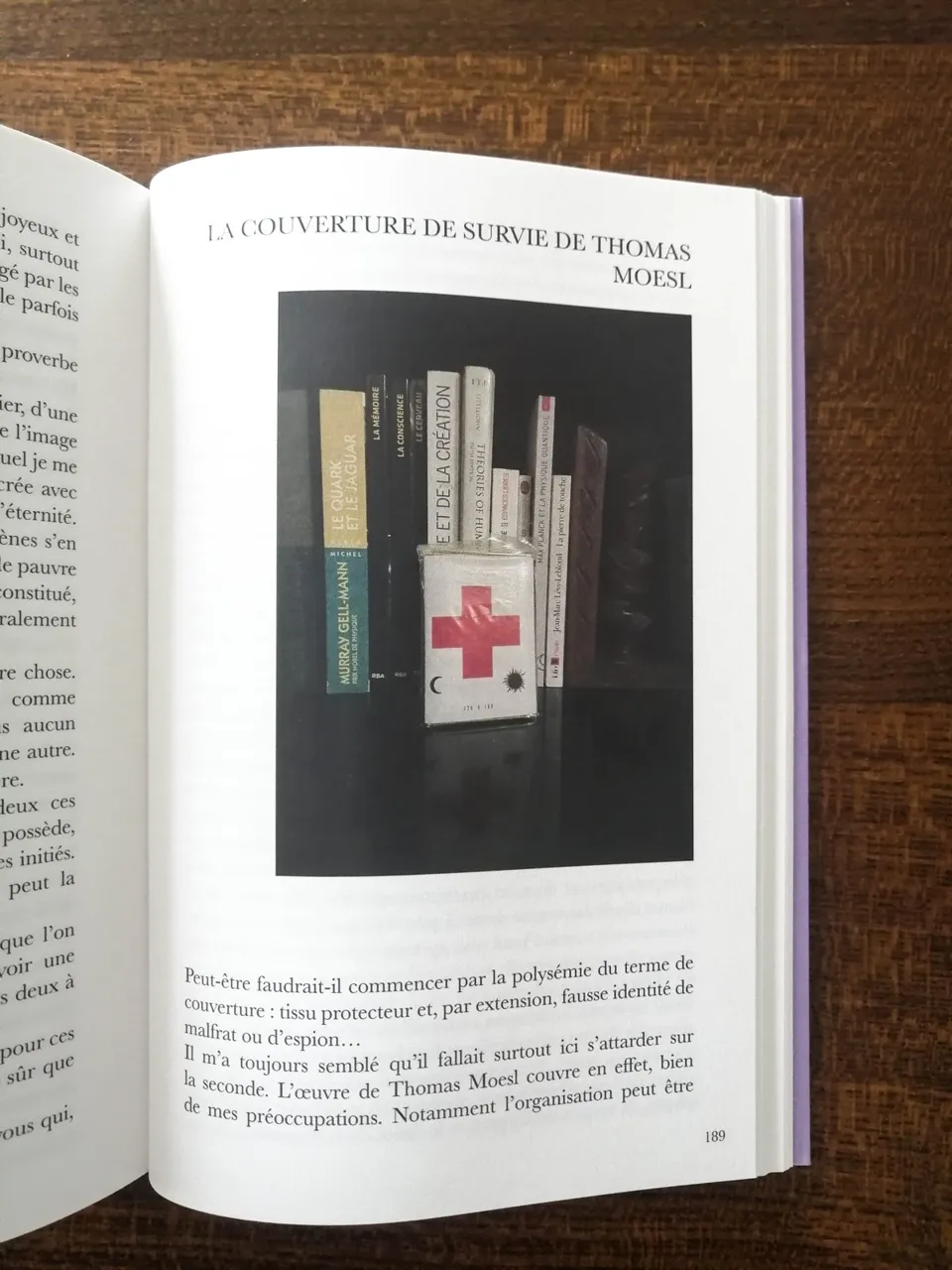
Deep within ourselves, we know that the Pythagoreans’ music of the spheres joins, through that extraordinary foresight of the Greeks, the most sophisticated calculations of Arecibo’s ears; or that Leibniz’s Monadology can be read, in a single movement, as both cosmology and aesthetics. Wrapped in such a sonic experience, we cannot help thinking of the emergency blanket on which Thomas engraved calculations and ancient glyphs, half scholarly and half initiatory, with which we sought to cover ourselves as if donning a talisman.
Covered by these sounds, certainly, but above all protected from military fanfares and ideological commands, so that perhaps the contrasting breath of the universe can finally be heard.
Distracted into the most extreme concentration, reflective as if in a trance, we let ourselves be carried by these organic rustlings and by the rough harmonies of some celestial vault. At times immersed in a natural bath, at others thrust into a space without bearings, these sounds let us experience, intensely and gently, the complexity of a physical world we discover only insofar as it questions us.
How terrible for the philosopher, with his blacksmith’s writing, to attempt on his anvil to account for such a work, laboriously emphasising what should, by definition, escape us in order to convince us more fully. What can Vulcan do against the sonic power of the flute player in the German tale? He is caught like a rat.
So let us allow our conversion to take place in magical assonance—let us leave the sounds—and pray that our words carry little weight: perhaps then they will have a chance to fly above our heads. Sounding balloons or dreams, it makes no difference: both compose the singular score of Ears Wide Shut.
Let our ears close to imposed noises: they will then know how to hear the song of the world.
Text by Laurent Devèze
Peine Capital
Do you know why, if you inadvertently turn a loaf of bread upside down on the table, someone will hurry to put it the right way up, scolding you: “Never turn bread upside down! It brings bad luck”?
The story is quite simple. It goes back to the Middle Ages and continues long afterwards.
At market time, after buying your bread and three leeks, it seemed perfectly pleasant to attend a few executions in the public square. The poor executioner, busy making heads roll, had not had time to visit the baker.
That is why the baker turned a loaf upside down every morning: so as not to forget that it was reserved for the maker of corpses, who would collect it after his morning’s work.
In Thomas Moësl’s work, time is suspended. The motionless guillotine seems to wait for someone to operate it. Perhaps it will wait a long time yet: the impatient executioner has gone to collect his bread before the baker had time to turn it over.
Text by Joris Creuze
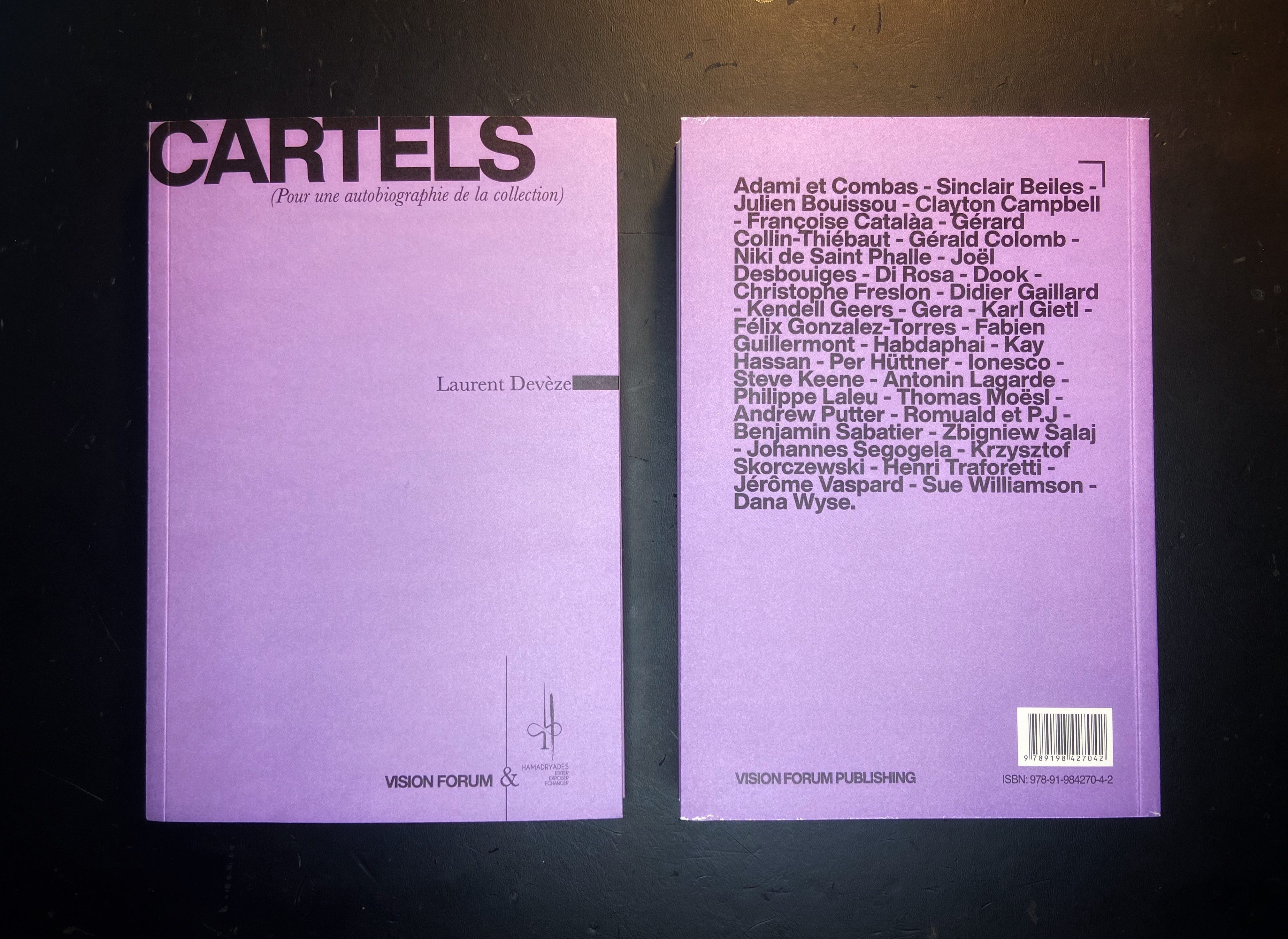
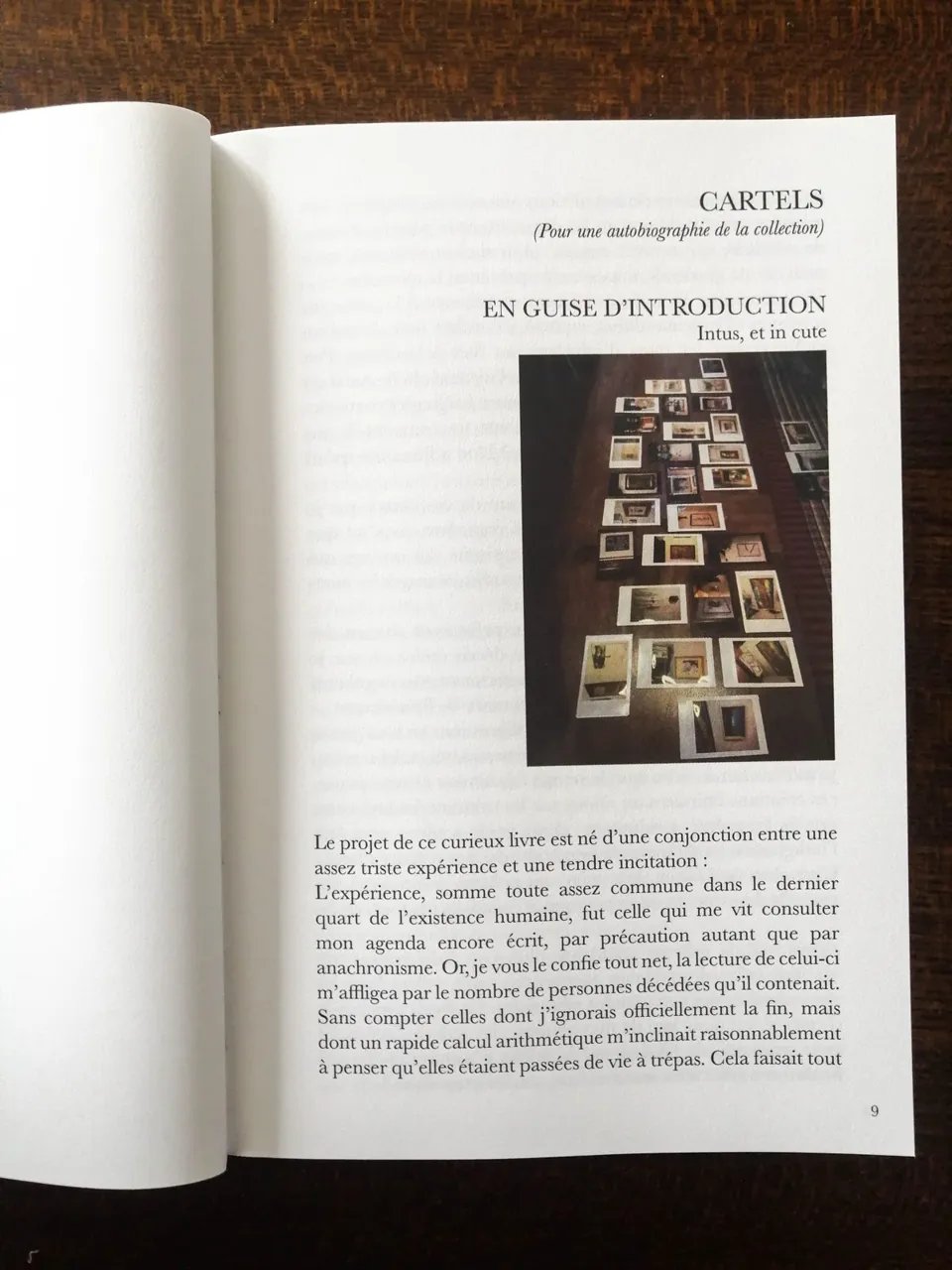
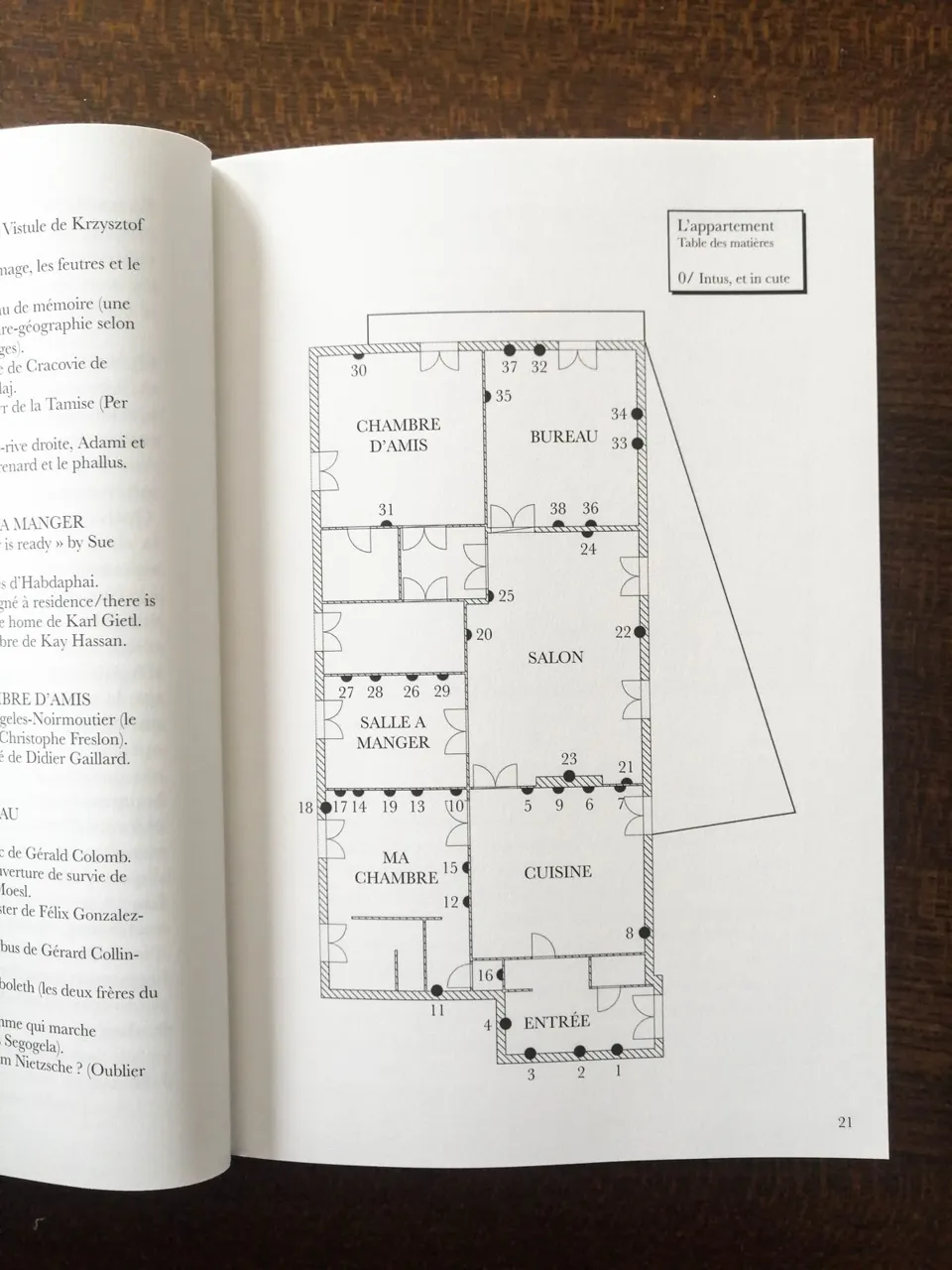
Cartels, pour une autobiographie de la collection
Laurent Devèze, co-published by Vision Forum and Hamadryades.